
For most of us, having a shower or bath is an ordinary part of daily life. For someone with significant physical disability, neurological impairment or complex postural needs, it can be anything but ordinary.
Getting washed may involve moving from bed, hoisting, transferring, maintaining posture, managing pain or involuntary movement, and providing intimate personal care.
When the right environment, equipment and support are not available, the consequence may be that someone remains in bed for personal care, has fewer opportunities to shower or bathe, or becomes unnecessarily dependent on others.
This is about more than hygiene. It is about dignity, choice, participation and wellbeing.
Hygiene is more than completing a task
Good personal hygiene supports skin integrity, comfort and health. But washing is also one of our most private daily occupations.
Even when someone needs significant assistance, they should remain an active participant wherever possible. That might mean choosing when and how they wash, communicating preferences, washing parts of their own body, or simply being positioned comfortably enough to engage with what is happening.
The question should not simply be:
“Can we get this person washed?”
It should be:
“How can we enable this person to participate in washing safely, comfortably and with dignity?”
What does UK legislation say?
In England, the Care Act 2014 provides an important framework. The Act places individual wellbeing at the heart of care and support, including personal dignity, physical and mental health, protection from abuse and neglect, control over day-to-day life and participation in work, education, recreation and community life.
The Care and Support (Eligibility Criteria) Regulations 2015 specifically recognise being able to maintain personal hygiene and make use of the adult’s home safely as important outcomes when considering care and support needs.
The Human Rights Act 1998 is also relevant. Article 8 protects respect for private and family life, which encompasses personal autonomy and physical integrity. Intimate care should therefore be delivered in a way that respects privacy, choice and the individual.
The Equality Act 2010 provides further protection against disability discrimination and places duties on services to make reasonable adjustments where required.
Alongside this, health and safety legislation requires risks associated with moving and handling and work equipment to be properly assessed and managed. The Provision and Use of Work Equipment Regulations 1998 (PUWER) require work equipment to be suitable for its intended use and for the conditions in which it will be used. This is particularly relevant when selecting showering and bathing equipment. The equipment must be appropriate for the person, the activity, the environment and the way in which carers are expected to use it.
The answer should not automatically be more carers. Sometimes the appropriate equipment, environment and handling approach can provide a safer and more dignified solution for everyone involved.
Assess the whole journey
One of the most important principles is that we cannot assess bathing equipment in isolation.
For some people, the biggest barrier to having a shower is not the shower itself. It is getting out of bed and getting there.
Assessment should consider the whole hygiene journey: moving from bed, transfers and hoisting, sling selection, access through the environment, postural support, pressure and skin integrity, pain and fatigue, communication and cognition, positioning during washing and drying, and the person’s own goals and preferences.
The equipment then needs to fit around the person.
Depending on individual need, this might include a mobile shower chair, tilt-in-space hygiene chair or cradle, shower trolley, height-adjustable bath, appropriate transfer equipment or additional postural supports.
When body shape makes bathing more complex
For people with complex or asymmetrical body shapes, significant loss of postural control, reduced muscle tone or a tendency to slide or lean, a standard shower chair may not provide sufficient support.
The same principles of good seating that we consider throughout the day should not disappear when someone enters the bathroom. We still need to think about how we load and support the body, provide appropriate postural support, facilitate repositioning where required and select a suitable support surface.
A good example is the Tide 900 Adult Cradle from Posicare by Seating Matters. It is a tilt-in-space assisted bathing solution designed to accommodate individual postural requirements. Its 3D-Spacer fabric moulds around the body to provide support and comfort, while up to 45° of in-situ tilt/recline can help clinicians and carers achieve a more supported position during bathing. Additional remouldable supports can also be used where more individualised head, trunk, lumbar or full-body support is required.
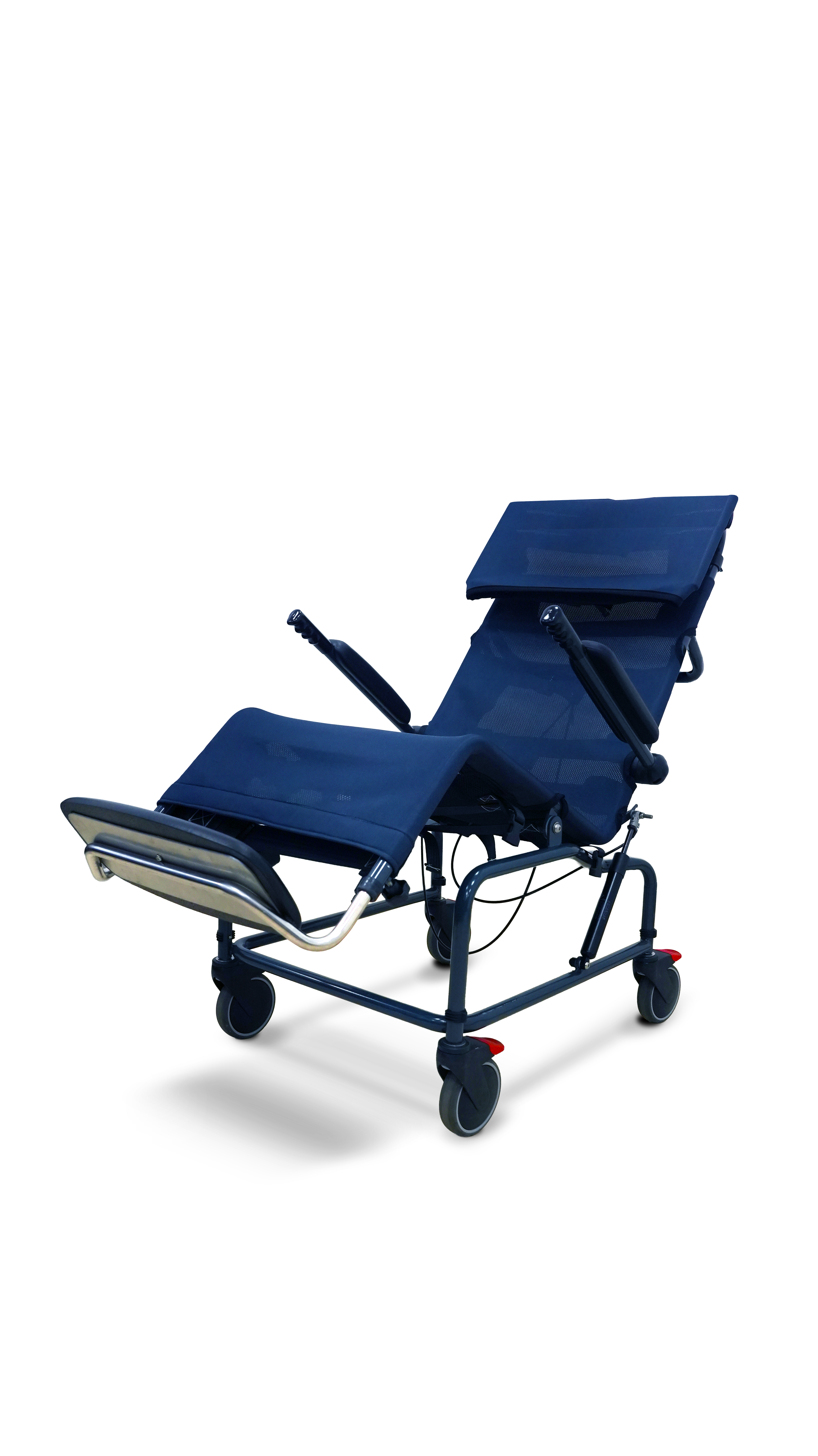
For someone with a complex body shape, this type of solution can allow the principles that underpin good therapeutic seating to continue into personal care. Rather than expecting the individual to maintain a position that they cannot safely sustain, the equipment can help accommodate and support their body shape.
This is particularly important where poor positioning could contribute to sliding, instability or an increased risk of falling from the equipment. Appropriate tilt, body support and positioning can improve stability while also allowing carers better access for washing and personal care.
The aim is not simply to find a shower chair that the person fits into. It is to identify an optimal and safe bathing solution that supports posture, comfort, dignity and participation throughout the activity.
More than preventing falls
Specialist hygiene equipment should not simply prevent an accident.
The right solution can enable someone to get out of bed, experience warm running water, participate in washing and maintain an ordinary and meaningful daily routine.
It can support posture and comfort. It can improve access to different areas of the body and support skin care. It can also reduce unnecessary physical handling and enable carers to provide intimate care more safely and respectfully.
Research into bathing adaptations has identified improvements in independence, quality of life and fear of falling, while research into intimate hygiene highlights the importance of preserving choice, competence and agency when someone becomes dependent upon others.
Designing care around the person
A rights-based approach to hygiene asks us to look beyond whether the task has technically been completed.
Does the person have genuine choice?
Can they participate as much as possible?
Are their privacy and dignity protected?
Have we considered their posture and support needs?
Do the equipment and environment fit the person, rather than expecting the person to fit them?
Access to appropriate hygiene equipment can make the difference between personal care being something that is done to a person and an everyday activity in which they can participate.
Because being clean is important.
But being able to wash with comfort, choice, dignity and the right support matters too.
References
Care Act 2014.
Care and Support (Eligibility Criteria) Regulations 2015.
Equality Act 2010.
Human Rights Act 1998.
Provision and Use of Work Equipment Regulations 1998.
Golding-Day, M. et al. (2020). Bathing adaptations in the homes of older adults and their carers: a qualitative extended follow-up study with concurrent nested outcome assessments. BMJ Open, 10, e035701.
King, E.C. et al. (2019). Exploring the use of assistive products to promote functional independence in bathroom activities among older adults. PLOS ONE, 14(4), e0215002.
Ó’Conaire, K. et al. (2021). Conserving dignity and facilitating adaptation to dependency with intimate hygiene. Australian Occupational Therapy Journal, 68(5), 454–464.
Posicare by Seating Matters. Tide 900 Adult Cradle: Bathing Range Cradle. Product and clinical information.
United Nations. Convention on the Rights of Persons with Disabilities.
World Health Organization. Assistive Technology.